Security
Audits
Ramses Architecture
Ramses V3 is based on Uniswap V3, with several enhancements. These improvements include dynamic system and protocol fee mechanisms and x(3,3). Ramses V3 also introduces a new accounting system to track how much active liquidity each concentrated liquidity position provides.
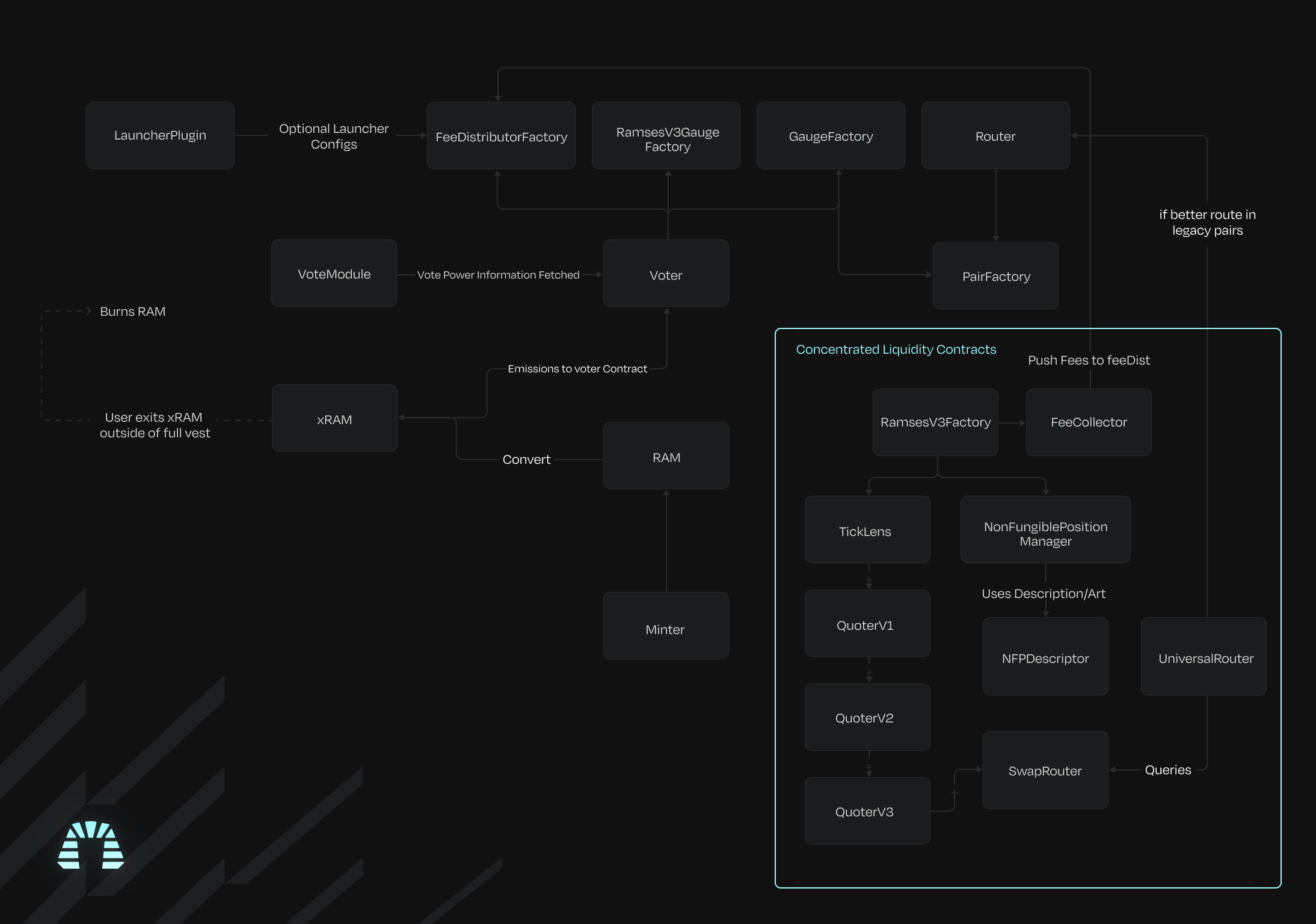
Pool Custody and System Mutability
Ramses V2 and V3 liquidity pools are noncustodial. AccessHub does not expose a function that can withdraw an arbitrary LP's pool deposits or transfer a user's V3 position NFT. Withdrawing liquidity still requires control of the relevant LP token or position NFT, or an approval granted by its owner, through the normal pool and position-manager interfaces.
This custody protection is distinct from system-wide immutability. Authorized AccessHub roles can change parameters and connected protocol configuration, including swap fees and fee splits, gauge status, emissions and reward settings, token whitelists, tick-spacing availability, and fee-collection settings. Multisig- and timelock-restricted paths can also update designated protocol dependencies and implementations. These controls do not give AccessHub custody of an individual user's pool position, but they can change the economic and governance conditions around that position.
Access Control
AccessHub uses three role-based permissions in addition to functions restricted directly to the treasury multisig or timelock. Actual role holders are deployment-specific and should be verified on-chain.
DEFAULT_ADMIN_ROLEcan grant and revoke AccessHub roles. Early-stage deployments retain both multisig and timelock administration while controls are progressively transferred to the timelock; this transition is planned rather than assumed complete.PROTOCOL_OPERATORcovers operational governance and configuration. Its authority includes whitelisting, creating, killing, and reviving gauges; changing emissions and reward settings; enabling tick spacings; and changing several treasury, fee, and factory parameters.SWAP_FEE_SETTERsets pool swap fees and participates in fee-split and protocol maintenance paths used by the dynamic fee system.
Some sensitive configuration and implementation changes remain restricted by direct multisig or timelock checks rather than these three roles. During the early operating stage, Ramses therefore retains non-timelock controls. The governance objective is to move appropriate authority progressively behind the timelock as the system matures.
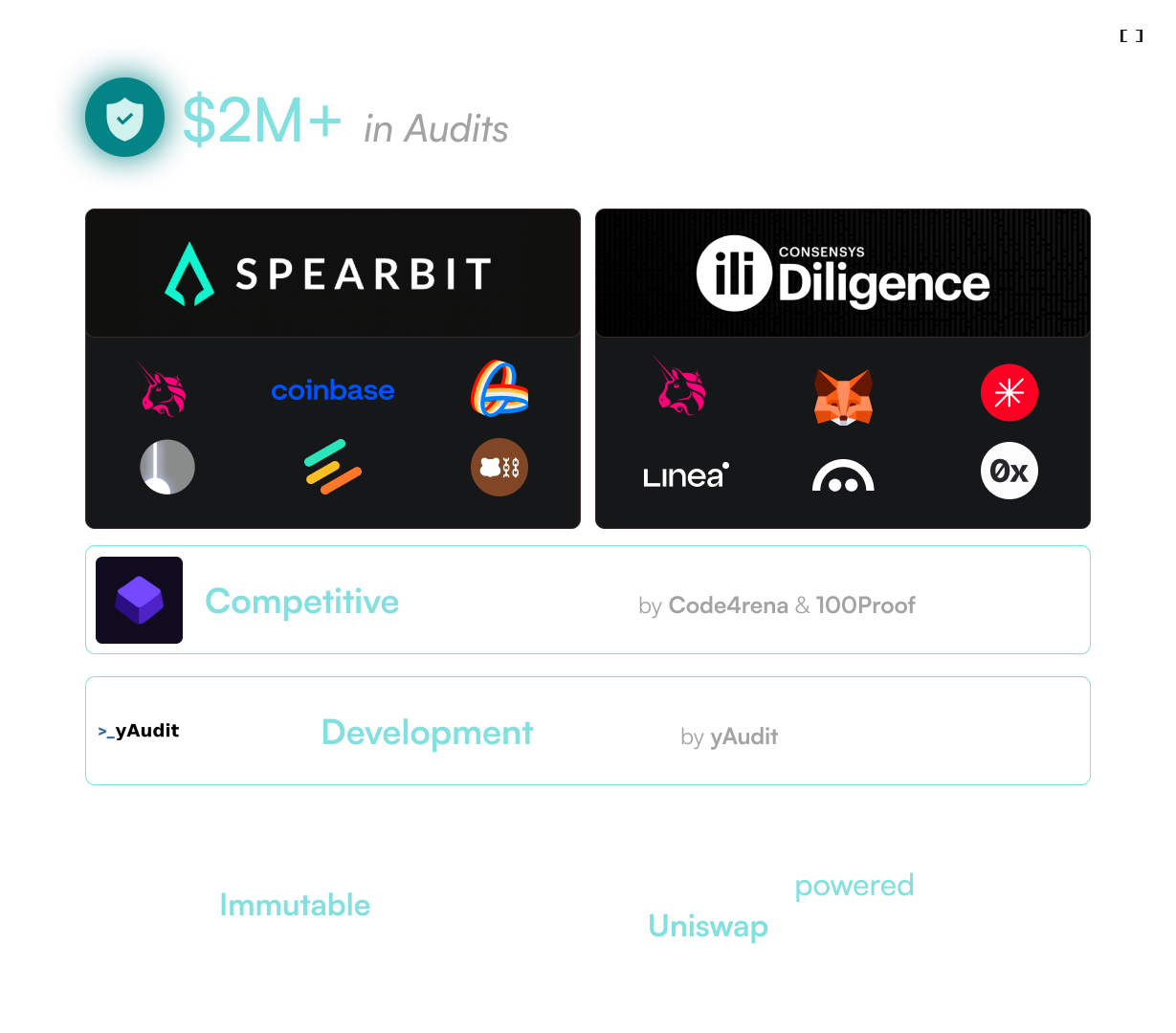
Audits
Ramses V3 Review
Consensys  |
|---|
Ramses-Commissioned Shared-Code Reviews
Ramses also commissioned the following reviews of Ramses-derived or shared core codebases used by other projects. The linked public engagement targets are Etherex Contracts and shadow-x33, respectively. These reports may inform Ramses' security work, but they are not Ramses deployment-specific audit reports.
Spearbit — Etherex Contracts  | Cantina — shadow-x33 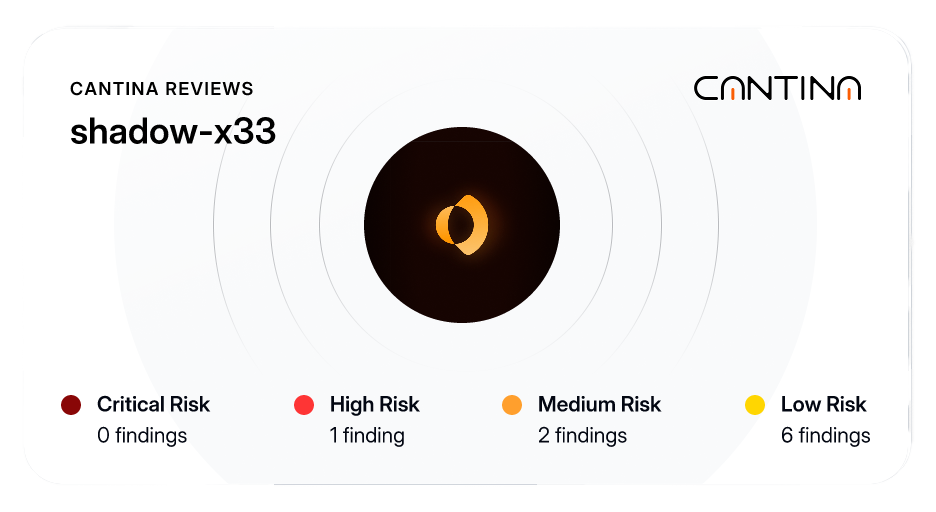 |
|---|
Security Competition
Code4rena
Ramses V3 CLMM Contest Report
Additional Security Coverage
- Specialized Testing Review by 100Proof via C4rena
- Post-Competition CL Audit by Zenith Mitigation
- Private Development Review by yAudit
- Testing Review with Spearbit researchers